

2024 Workshop on Wide-Bandgap Semiconductor Integrated Electronics (WWIE’24)
6 December 2024, Friday
Hong Kong University of Science and Technology
Clear Water Bay, Kowloon, HONG KONG
Venue: Leung Yat Sing Lecture Theatre (LT-F)
Contact Information:
For inquiries, please contact Ms. Venus PANG: eevenus@ust.hk
Organized by:
Center of Wide-Bandgap Semiconductor Electronics (CWISE), HKUST
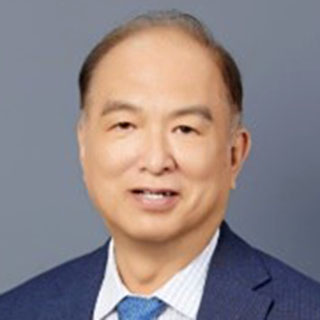
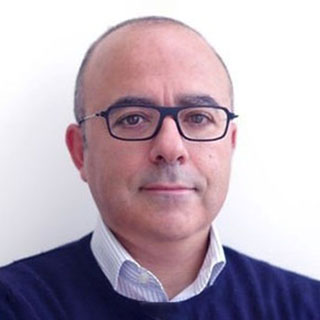
Talk-1: Out-of-SOA Electrothermal Limitations of Power Semiconductor Devices: Characterization and Modelling
Time: 0915 - 0950
Nowadays Wide Bandgap semiconductor devices are getting an increased attention due to some attractive features and superior electrical properties. As the use of these devices is reaching the market, many concerns about their robustness and long term reliability are arising. In this talk, we will focus on the behavior of Silicon carbide power Mosfets during out-of-SOA events such as short circuit or unclamped inductive switching conditions. In the first part of the talk, a detailed approach to self consistent electrothermal simulations of power devices will be given, while in the final part of the talk some results of infrared characterization of short circuit events in power devices will be reported.
Biography
Andrea Irace (Senior Member, IEEE) received the master's degree in electronic engineering and the Ph.D. degree in electronics and computer science from the University of Naples Federico II, Naples, Italy, in 1994. In 1998, he was a Visiting Scientist at the Delft Institute of Microelectronics and Submicron Technology, Delft, The Netherlands. He is currently a Full Professor of Electronics with the University of Naples Federico II. He has authored more than 200 articles published in peer-reviewed international journals and conferences. His research interests focus on the design of electronic devices for renewable energy sources and electric mobility, the development of sensors for biomedical applications, and the Internet of Things (IoT). Prof. Irace is a member of the Technical Program Committee of ICSCRM and ESREF and he has acted as General Chairperson for the 2023 edition of the International Conference on Silicon Carbide and related materials.
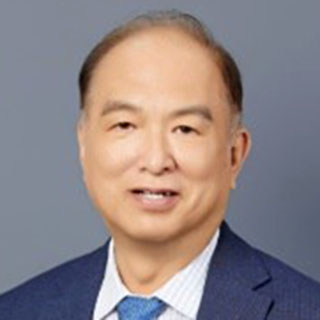
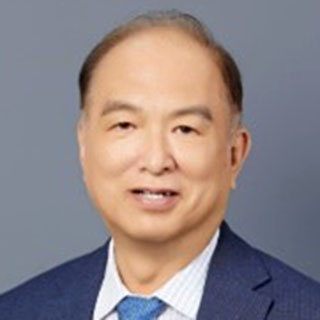
Talk-2: GaN Power HEMTs with Ferroelectric Gate Stack for EV and PV Applications
Time: 0950 - 1025
GaN-based high-electron-mobility transistors (HEMTs), which possess high saturation velocity, electron mobility, current density, and breakdown voltage with low resistance, are getting more popular for high-power switching applications. However, their inherent property with normally-on operation is unfavorable for power-switching applications for electric vehicles where safety is paramount. To achieve normal off operation for GaN HEMT devices, several methods have been proposed to achieve a high positive threshold voltage value. This work uses a novel charge storage structure with a hybrid ferroelectric charge-trapping gate stack to realize the GaN E-mode MIS-HEMT with high threshold voltage for EV and PV (> 3.5 V) applications. This gate stack structure combines ferroelectric film with a charge-trapping layer and current-blocking film, resulting in a polarization charge field against the applied gate voltage, and thus achieves a large positive shift of the threshold voltage. The device has a high Vth; meanwhile, low on-resistance, high IDS,MAX, and high breakdown voltage are maintained, perfect for EV and PV applications. The reliability evaluation for these devices will be addressed to facilitate their practical applications in the future.
Biography
Professor Edward Yi Chang received his PhD degree from the University of Minnesota, Minneapolis, MN, USA, in 1985 and honorable doctorate for UKM Malaysia. and worked for Unisys Corp and Comsat Labs in the USA from 1985-1992. In 1992, he joined National Chiao Tung University (NCTU), Hsinchu, Taiwan. He is currently Chair professor of National Yang Ming Chiao Tung University (NYCU), Dean of International College of Semiconductor Technology, and Chair Professor of the Department of Materials Science and Engineering and Department of Electronics Engineering. Prof. Chang is an IEEE Life Fellow, JSAP Fellow International, TMRS Fellow and Distinguished Lecturer of the IEEE Electron Devices Society. His current research interests include III-V and GaN based devices for logic, high frequency, and power applications. Dr. Chang holds more than 40 patents worldwide and has authored or co-authored more than 250 journal papers in related research areas.
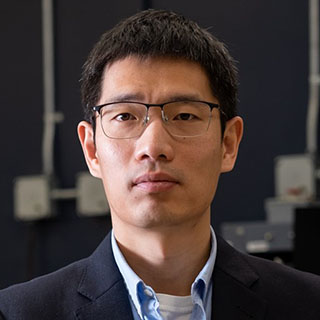
Talk-3: High-Frequency GaN Based Converters with Integrated Magnetics
Time: 1040 - 1115
The majority of power electronic equipment, with few exceptions, has traditionally been designed and constructed using discrete active and passive components. The power electronics industry has reached a level of maturity where enhancing one performance attribute often comes at the expense of others. Moreover, manufacturing practices have remained labor-intensive and largely unchanged for decades.
The emergence of the new generation of wide-band-gap power semiconductor devices, such as GaN, presents a significant reduction in both conduction and switching losses when compared with their silicon counterparts. Current design practices involving these Wide Band Gap (WBG) devices often adhere to a 'plug-and-play' concept, resulting in incremental improvements in efficiency and power density. However, this approach fails to fully unlock the potential for a transformative paradigm shift in the design and manufacturing process.
This presentation will highlight the potential of combining PCB-based magnetics with GaN power devices to bring about a fundamental shift in design and manufacturing practices. This holistic approach has the capability to simultaneously enhance all performance attributes, encompassing efficiency, power density, cost, and electromagnetic compatibility (EMC). Moreover, the labor-intensive aspects of manufacturing, such as processes related to magnetics and system assembly, can be efficiently streamlined through automation.
Biography
Dr. Qiang Li received the B.S. and M.S. degrees from Zhejiang University, China, in 2003 and 2006, respectively and the Ph.D. degree from Virginia Tech, Blacksburg, VA, in 2011. Dr. Li currently is a full Professor in the Center for Power Electronics Systems at Virginia Tech. His research interests include, high-frequency power conversion and controls, high-density electronics packaging and magnetics integration, and power solutions for high performance computing, datacenter, electric vehicles and energy storage.
Dr. Li published over 240 peer-reviewed technical publications, including more than 70 journal articles; he has received eight prize paper awards. Dr. Li is an associate editor for IEEE Transactions on Power Electronics and IEEE Journal of Emerging and Selected Topics in Power Electronics Dr. Li is also a recipient of National Science Foundation (NSF) Career Award.
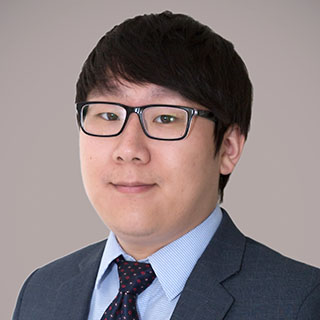
Talk-4: Ga2O3 Power Device Toward High-Voltage and High-Temperature Applications
Time: 1400 - 1435
Benefitted from progress on the large-diameter Ga2O3 wafers and Ga2O3 processing techniques, the Ga2O3 power device technology has witnessed fast advances. Recently, reports on large-area (ampere-class) Ga2O3 power devices have emerged globally, and the scope of these works have gone beyond research device demonstration into device packaging, circuit testing, and ruggedness evaluation. These results have placed Ga2O3 in a unique position as the only ultra-wide bandgap semiconductor reaching these indispensable milestones towards commercialization and application.
This talk will first introduce our work on exploring the new application space of Ga2O3 devices, particularly towards high-voltage high-temperature applications. By deploying multidimensional architectures, we demonstrated Ga2O3 diodes and transistors with breakdown voltage over 10 kV and operational temperatures over 200 oC. This talk will then discuss the packaging and robustness of Ga2O3 devices. Using the junction-side cooling package, the intrinsic thermal limitations of Ga2O3 material can be effectively addressed. The deployment of a unique bipolar heterojunction allows for the demonstration of avalanche and surge current robustness in Ga2O3 devices. Overall, the parallel efforts in device development, packaging, and robustness could synergistically propel the Ga2O3 technology towards power electronics applications.
Biography
Yuhao Zhang is currently a professor with the Department of Electrical and Electronic Engineering of the University of Hong Kong (HKU). Before joining HKU, he was the Shirish S. Sathaye Associate Professor with Virginia Tech, leading the power semiconductor research at the Center for Power Electronics Systems. He received his Ph. D. and S. M., both in electrical engineering from MIT in 2017 and 2013, respectively. He has authored over 180 journal papers and conference proceedings and holds 7 granted U. S. patents. He is a co-author of over 10 highlight/feature/prize papers, and his research work has been widely covered. He received the MIT Microsystems Technology Laboratories Doctoral Dissertation Award in 2017, two IEEE George Smith Awards (best paper award of the year in IEEE Electron Device Letters) in 2019 and 2023, three Technical Highlights of IEEE International Electron Devices Meeting in 2020, 2021 and 2024, the National Science Foundation CAREER Award in 2021, the Outstanding New Assistant Professor Award and Faculty Fellow Award of Virginia Tech in 2021 and 2022, and the Office of Naval Research Young Investigator Award in 2023. His students received the Ph.D. Thesis Talk Award of the IEEE Power Electronics Society and several APEC Best Presentation Awards. He is an Associate Editor of the IEEE Transactions on Power Electronics.
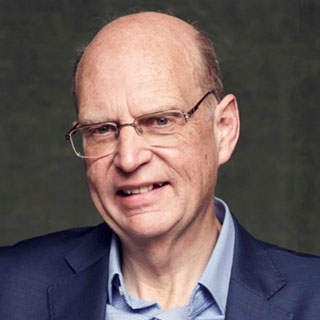
Talk-5: Recent Developments in Devices and Modules for Electric Vehicles in the UK
Time: 1435 - 1515
In this talk we will present some the developments in SiC power electronics for automotive applications. This is based on two large UK projects in this space funded by the Advanced Propulsion Centre. These projects were focused on the supply chain for both power devices and 800V inverter development.
Biography
Phil Mawby is Chair of Power Electronics University since 2005 and Head of Electronics and Power Electronics Group at Warwick since 2006. He is an expert on SiC materials, devices and applications and specializing in SiC power devices and reliability, numerical modelling and RF devices. He leads for Warwick University’s cross-disciplinary Global Research Programme in Energy. Lead for EPSRC programme: Vehicle Electrical Systems Integration (VESI). A large consortium of 10 UK Academic institutions focusing on electrical power systems for Electric Vehicles (EVs). Lead for Devices theme and executive committee member of EPSRC Underpinning Power Electronics Centre. Academic lead for work on power electronic devices of £18m research centre recently established by the EPSRC. Lead academic on APC projects ESCAPE and @FUTUREBEV both high value projects delivering the UK a supply chain in SiC power electronics.
Prof. Mawby is UK Energy Research Centre Research Committee Member, Member of the EPSRC engineering college, Member of the Industrial Leadership Group for Power Electronics UK. He has served on several selection panels, and as Chair of EPSRC GaN programme Grant advisory committee. Prof. Mawby has been appointed as Technical Advisor to Vishay since Vishay acquired Maxpower. This role integrated him fully into the Company’s developments in SiC product delivery and advise on strategy in this area.